When he is not teaching environmental politics at Carleton University in Ottawa, Peter Andrée grows organic vegetables in Wakefield, Quebec.

Canada's Environmental Voice

When he is not teaching environmental politics at Carleton University in Ottawa, Peter Andrée grows organic vegetables in Wakefield, Quebec.
Robyn Hall is the communications manager for Canadian Business for Social Responsibility, a non-profit consultancy that helps Canadian companies improve their social, environmental and economic performance.

A real-life A\J staff picnic in Victoria Park, a 2-minute walk away.
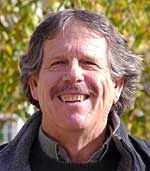
Robert Paehlke is a professor emeritus at Trent University where he taught environmental policy and politics for 35 years. About 40 years ago, he envisioned a magazine that was both scientifically sound and journalistically interesting, and Alternatives was born. “Bob P,” as we call him, sits on the magazine’s editorial board and […]
Rob Thacker is an astrophysicist, teacher, communicator and all round big kid. He is also an associate professor and Canada Research Chair in Computational Astrophysics at St. Mary’s University in Halifax. NASA’s proposed Terrestrial Planet Finder project would study planets beyond our solar system for important clues on the conditions […]
Ray Tomalty is principal of Smart Cities Research, a Montréal consulting firm that specializes in issues related to urban sustainability. He is also an adjunct professor at the School of Urban Planning at McGill University, an A\J editorial board member and a regular contributor to the magazine.
Author, activist and cancer-survivor, Sandra Steingraber is often compared to Rachel Carson. Every week, she writes an essay on environmental health. Follow her at livingdownstream.com/essays.
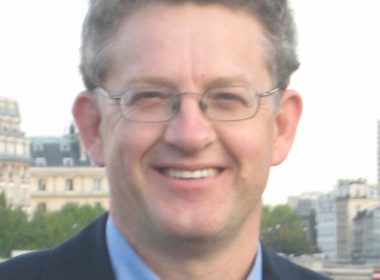
Stephen Bocking, a regular contributor to Alternatives, is professor at and chair of the Environmental and Resource Science/Studies Program at Trent University and author of A\J’s EcoLogic blog. You can follow Stephen on Twitter at @BockingStephen or read his blog: Environment, History and Science.
Thomas Homer-Dixon, author of The Upside of Down and The Ingenuity Gap, recently joined the University of Waterloo, where his interest lies in studying resilience and innovation.
William Rees, co-author of Our Ecological Footprint, is a human ecologist and ecological economist at the University of British Columbia’s School of Community and Regional Planning.