The Raw Milk Revolution, by David E. Gumpert, would more accurately be entitled “Milk Wars.” Any attempt to sell raw milk creates a froth of such proportions that we must conclude that it is symptomatic of something bigger.

Canada's Environmental Voice


The Raw Milk Revolution, by David E. Gumpert, would more accurately be entitled “Milk Wars.” Any attempt to sell raw milk creates a froth of such proportions that we must conclude that it is symptomatic of something bigger.

How do you change the world? Where do you start, locally or globally? For inspiration and a way out of the paralysis that stymies so many of us, two remarkable women – Jane Jacobs and Frances Moore Lappé – offer some practical ideas.

In The War in the Country, Thomas Pawlick has done a great service. He documents recent tensions and traumas that have battered every rural community across Ontario. Moreover, he reports in the voice of family farmers, small businesses, native people and back-to-the-landers. These stories are worth keeping in your library to […]
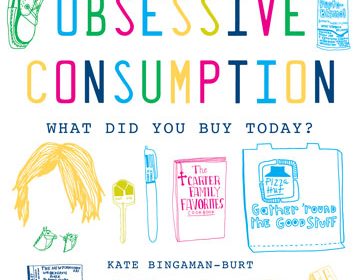
You don’t often come across a book of innocent-looking doodles that has the power to make you reflect on the deeper meaning of life. Kate Bingaman-Burt’s Obsessive Consumption does just that.
If we can’t agree about Climate Change, how can we possibly address the issues in time to prevent disaster?

It’s odd. At 68, James Hansen, arguably the planet’s most renowned climatologist and one of the earliest prophets of human-induced global climate change, has finally published his first book. “Odd” is a fitting description for the book as well.

At last, here is a book about our common future that we don’t have to be afraid to read. Written by “transition movement” founder Rob Hopkins, The Transition Handbook offers an inspiring and practical blueprint for community-based action in response to the challenges of climate change and peak oil.

It’s no secret that Stephen Harper’s Conservatives have designed their environmental policy to fit a full-speed-ahead exploitation of Alberta’s tar sands. It’s important, therefore, to have an understanding of the industry’s environmental impact. Andrew Nikiforuk’s award-winning Tar Sands offers precisely that.

Here’s a fact I had never considered: the word “rival” comes from the Latin word rivalis, meaning “those who draw water from the same source.” Rivalry is closely related to the availability of shared resources, and tensions are easily triggered when food and water are at stake.

Slow Death by Rubber Duck has one non-chemical ingredient that catapulted it to the top of the charts. As the story goes, the duo behind the Chicken Soup for the Soul empire couldn’t find a publisher when they assembled their first book. But despite Chicken Soup’s winning formula – 112 million books sold in 15 years […]