New one year print subscriptions for past A\J alumni are just $25 when ordered through this page. Questions? Ask away!

Canada's Environmental Voice

New one year print subscriptions for past A\J alumni are just $25 when ordered through this page. Questions? Ask away!

The Waakebiness-Bryce Institute for Indigenous Health is the world’s first privately endowed research institute dedicated to the health of Indigenous Peoples. Created last June with a $10-million gift from Michael and Amira Dan, the institute was unveiled on March 23 of this year at the University of Toronto’s Dalla Lana […]

I’m travelling the world looking for answers. And on a beach in Thailand, I may have figured out why environmentalists’ messages fall on deaf ears. I was reminded of a video on YouTube of a couple on a beach in Thailand. It is December 26, 2004, 9:15 am. They […]

Gideon Forman Gideon Forman holds an MA in Philosophy from McGill and a certificate in Renewable Energy from the University of Toronto.

EACH WEEK, A\J staffers share our favourite facts & findings from whatever books, articles, documentaries, podcasts and other media we’ve been consuming. Here’s what we’ve learned this week.
Our Earth Day deal is over! Did you miss out? Sign up for the A\J update to stay in the loop and hear about our newest content and next deals.

TRANSCANaDA ABANDONED plans for an Energy East oil port in Cacouna, Quebec, earlier this month, pushing the projected finish date of the pipeline back two years, to 2020.

Recently, a group of senior citizens calling themselves the “Walking Sticks” met at High Park Nature Centre in Toronto to participate in a unique Nature Elders program. Nature Elders is an environmental education experience designed to address the unique needs and interests of seniors.

Picture a towering garden overflowing with native wildflowers. Add a Hobbit hole, an Ewok village, an airplane and a pirate ship all made from recycled and repurposed materials. Weave it all together with a network of winding trails and hidden treasures, and what do you get? The most fabulous natural […]
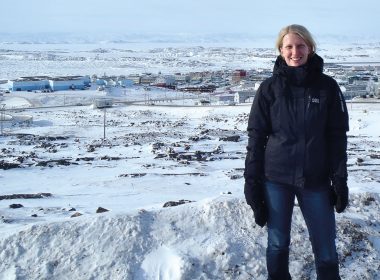
THE WORLD HEALTH ORGANIZATION has identified three major areas in which climate change may impact global health: waterborne and foodborne diseases; malnutrition and food availability; and vector-borne diseases, such as malaria, which is spreading as mosquitoes follow rising temperatures to new locations.